


I used to think of Bebek as the place where one goes for just two reasons - to see and be seen. A sleepy village by the Bosphorus less than a century ago, Bebek has turned into one of the most upscale Istanbul neighborhoods. The rich and beautiful people living here could have helped the country to pay off its external debt if they were to team up and sell their cars and yachts parked right here to the delight of a passerby. If you can’t afford living in Bebek it is still ok to come here to splash on a meal, not necessarily so excellent yet certainly self-esteem boosting. Thankfully, things change, and now you can travel to Bebek for something more substantial than the Bosphorus view and feeling good about your purchasing power - one of the best cups of coffee in Istanbul.
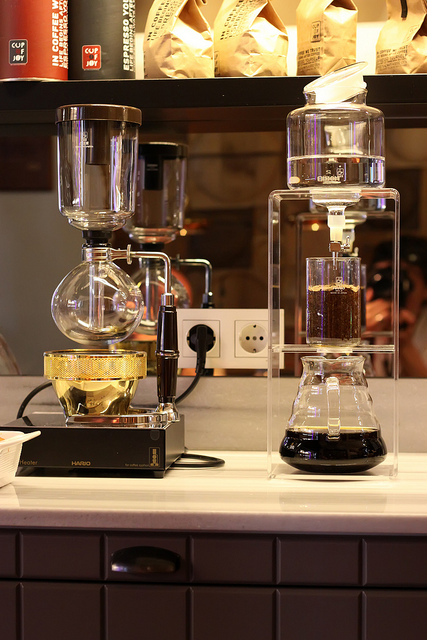
Cup of Joy, opened this spring, is a new outpost of the artisanal coffee that is still very a rare phenomenon for Istanbul. The coffee shop is tucked inside a tiny pasaji, a three-floored building occupied by the small commercial establishments. Small yet geared up Cup of Joy intrigues any curious coffee enthusiast. The long counter accommodates a sparkling coffee machine, few drippers and other brewing devices as well as a roaster where small quantities of beans are roasted as needed. You may take away if you can’t wait joining the Bebek crowd or you can grab a seat inside and get ready for something special. Susan and Serkan, exactly half of the Cup of Joy’s team, start chatting with you before taking order so you make yourself comfortable and have a look at what they offer. It’s hard to go wrong with the order though because the folks here are exigent about the beans they source and do have a good clue on how to brew a good cup of coffee.
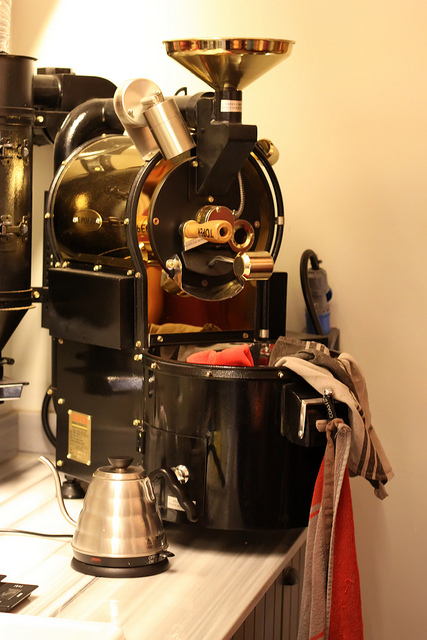
Cup of Joy is hardly a place to linger over a cup of Turkish coffee, and it is not because they don’t have the view to enjoy and so much space to linger. Serkan Ipekli, the Cup of Joy’s barista, like his other colleagues who are serious about the craft would not serve you Turkish coffee. In fact, he would not ever consider roasting the lowest quality beans used for the traditional beverage not to “contaminate” his roasting machine with the inferior product. Not that the experiments are not possible: Serkan confesses that he had a decent of cup of Turkish coffee prepared by his colleague who used traditional cooking method yet a new blend.
Yet Serkan prefers to devote his own experiments to the coffees that have not been around in Turkey for long. One of the experiments is right on the counter - the cold water coffee dripper: carefully timed drops accumulate in a thick layer of the ground coffee for hours before the first drops of the brew would even come out. Susan recommends this coffee iced without any milk, and my husband who would never drink black coffee decides to go for it. I feel skeptical as I often find coffee without milk too acidic and bitter. And so we try the manna from the dripper made of Finca Agua Tibia, a coffee coming from a 150-year old diverse farm in Guatemala.
I take a sneaky sip from the husband’s glass: the coffee tastes fruity (green apple, Serkan suggests) with a touch of chocolate and a slight hint of cinnamon. I then go back to my cup of excellent cappuccino made with fresh milk (no UHT), the fact that I started to value tremendously in Turkey.

We chat with Serkan. He comes from Izmir, largest city on the Turkish Aegean coast, where he studied music and developed a strong interest in coffee. Just like the Çagatay of KronotRop, the pioneer artisanal coffee shop in Istanbul, Serkan is a self-taught barista. His enthusiasm is overflowing so it’s a crime not to prompt him with questions. And Serkan is a good person to ask since this year he became the Barista Champion of Turkey. Serkan acknowledges that the barista trade is still hardly understood in Turkey, and he confesses that his family is still upset that after pursuing the studies at the conservatory he has chosen to make coffee instead. So, if you are going to like Serkan’s coffee you should consider sending a letter of encouragement to his parents.
Before leaving I am getting some of the mentioned Guatemala beans to take home. I ask Serkan if they are fine for Aeropress, the celebrated coffee brewing device that has brought the home brewed coffee to the new heights. Serkan takes a small handful of the beans and tosses them in the grinder to show me the required coarseness for Aeropress. I realize I have been grinding mine way too fine, which resulted in many bitter cups; yet I become hopeful to make a better cup next time.
Looking at the few Aeropresses on the shelf I ask Serkan whether he is using inverted method and he - quick on his feet - offers to brew a cup right now so I could see his process.
18 gram coffee to 250 ml water is Serkan’s magic formula for the perfect cup, he explains as he puts water to boil, grinds the beans and transfers the grind into the inverted Aeropress.
He places the new filter disc into the filter cup, wets it with cold water first and then warms it up with the steam from the coffee machine.
As the water is boiled Serkan pours a bit over the beans and stirs well, then waits for 20-30 seconds, pours the rest of the required water and stirs.
He fixes the filter cup and gently presses the chamber down to make the water come all the way to the rind until the tiny bubbles start breaking through the top.
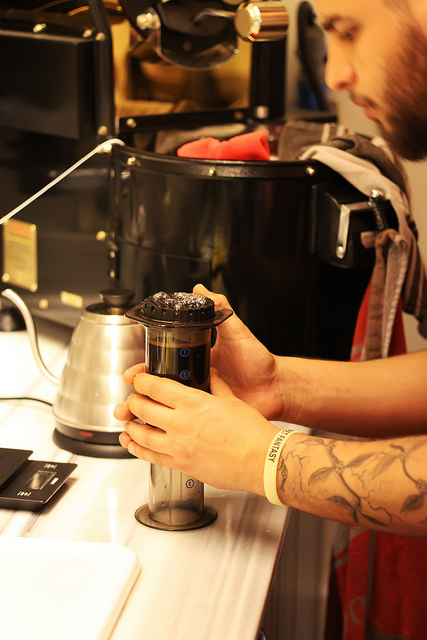
After 2 minutes or so he inverts the Aeropress onto a cup and puts his both hands on the plunger without pressing too hard.
The pressure pushes the brew into the cup, and after 20 seconds or so I am sipping a perfect cup of black coffee. Having milk with it does not even cross my mind. This brew does not have the intensity of the dripper version we tried earlier but makes a lovely fruit-tinted coffee to enjoy. Decent cup of coffee, bag of excellent beans and a crash course on brewing at home - that’s what I call a good reason to come to Bebek.
Cup of Joy
Address: Cevdetpasa Caddesi No. 53/5 (inside Yasemin Pasaji), Bebek
Phone: (0212) 263 00 06
Hours: 8 am to 7 pm (Wed, Fri and Sat - to 9 pm)
Website