



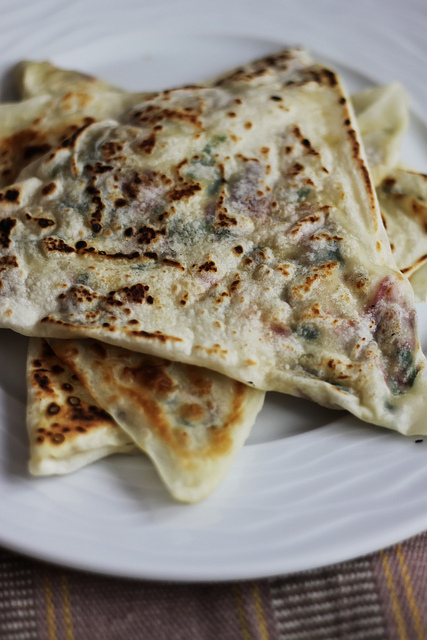
Watching gözleme, a flat dough parcel, being made from the scratch is not unlike witnessing a miracle. A woman sits on the floor, legs crossed, in front of the low round table that serves her as a minimalistic kitchen counter. She deftly rolls paper-thin dough yufka with oklava, a long thin stick that a novice of Turkish cooking would hardly believe to be a rolling pin. The woman rolls a small ball of dough into a 10-15cm round, then she rolls the dough on the pin and unrolls it leaving the perfectly round sheet of dough slightly larger and thinner as it was just a moment ago. And so she rolls and unrolls, rolls and unrolls until she makes an impossibly thin, round and large sheet of dough.
Next to the woman is inverted griddle (saç) that is traditionally mounted right on the open fire in the Turkish countryside; nowadays fire is often replaced by gas or electricity. The woman rolls the round sheet of dough, sprinkles the stuffing its half - crumbled lor with parsley, spinach, minced meat or potato - flips over the other half and transfers it to the saç, brushes its top with oil, flips the gözleme over and cooks until the dark brown, almost black, irregular polka dots cover the surface of gözleme here and there. Literally, your bread and circuses. No wonder so many restaurant owners in Sultanahmet called for a woman from their home village to come to Istanbul and spend her days rolling and cooking gözleme to the amusement and delight of the public. The animation trick no long-legged Russian would beat.
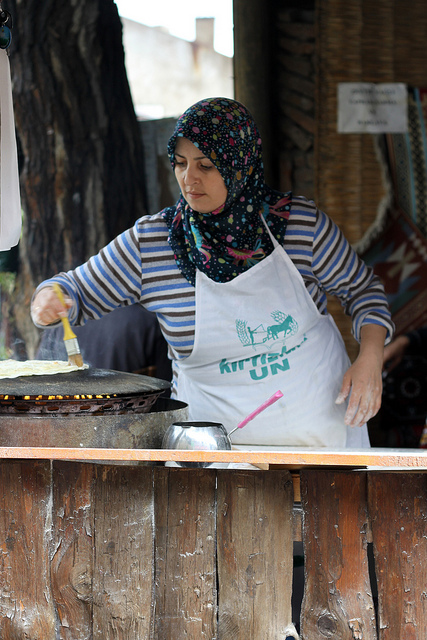
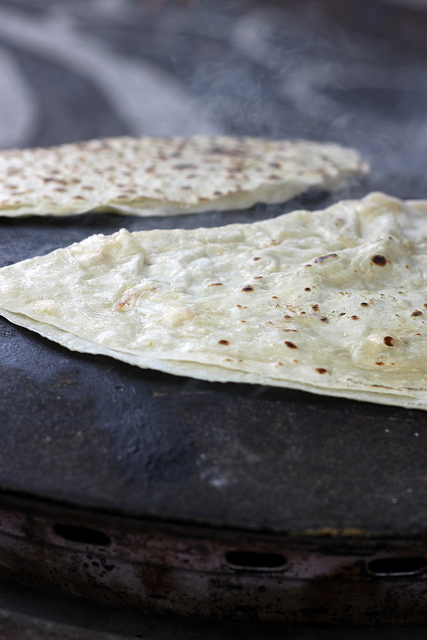
You don’t have to be a foreigner to idealize gözleme - most Turkish city dwellers do. No wonder that in most parts of Anatolia it is the most readily available snack for a traveler that pairs unsurprisingly well with tea and provides both the comfort of a familiar food and the thrill of eating something local.
I used to rave about gözleme on my first trips to Turkey, but its mystery started to clear away as I started understand its key element - yufka - better. Yufka dough is readily available fresh at a specialized neighborhood shop (yufkaci) that makes all the urban home cooks look better and way more skilled than they are.
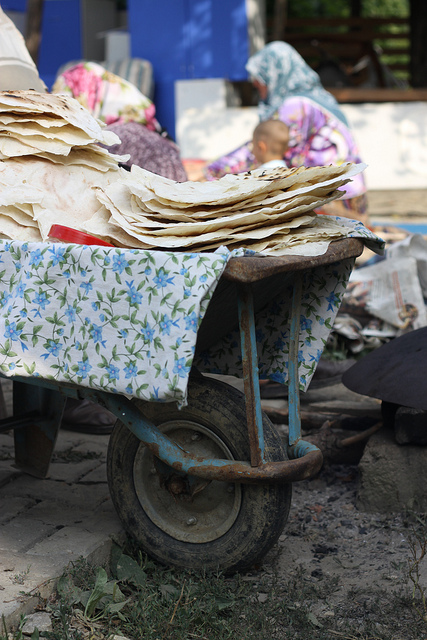
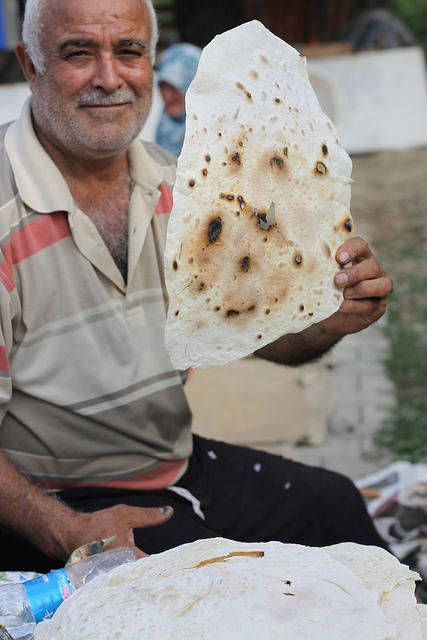
The simple formula of plain flour, water (at times milk) and pinch of salt creates one of the most essential and versatile item in the Turkish cooking. Yufka can be turned into a börek, a savory layered pastry, that ranges from finger food-spirited sigara böreği to tepsi böreği, a thrifty way to feed a crowd. Yufka is your flat bread when it is cooked to crispy on the sac and stockpiled (kuru yufka); before serving with a meal it is sprinkled with water to soften the crust. Fresh yufka is the cheapest and quickest bread: when I don’t have time to bake a loaf I mix flour and water, add a pinch of salt, roll as thin as possible, fold into a square parcel and cook for a few seconds on a cast-iron pan. Yufka can also be used as a cooking vessel when pilaf is cooked wrapped in the paper-thin dough. And finally, the thinner yufka gets you such exquisite desserts as baklava and katmer.
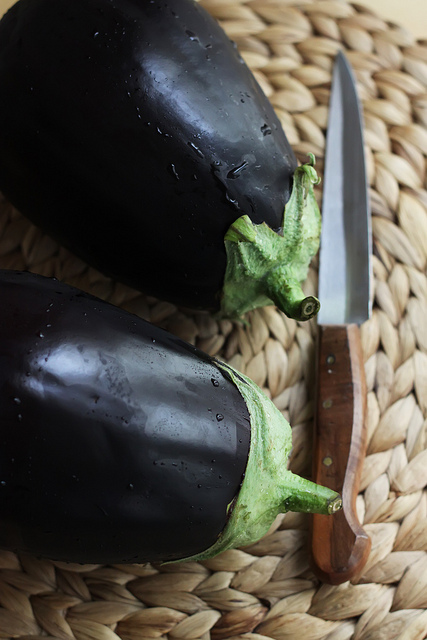
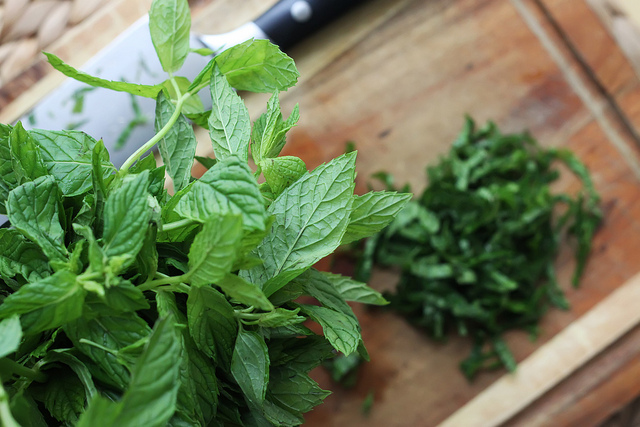
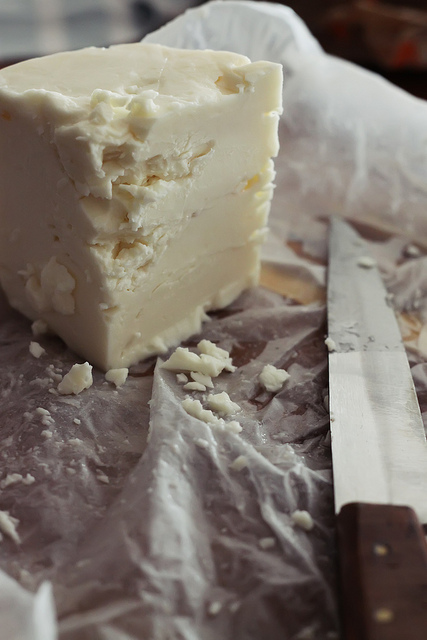
With so many ways to use the dough I am often fascinated how little diversity you will find without each category. Take gözleme - have you ever heard of gözleme stuffed with something else but the four traditional savory fillings? The comfort of eating familiar food never overrides the urge to experiment in my book, so I thought it is the good tome to revisit gözleme.
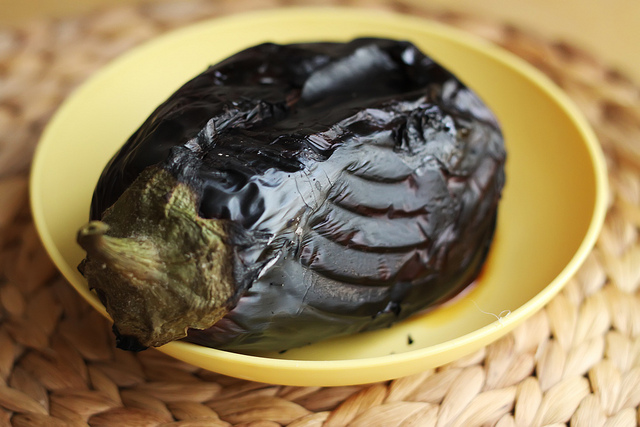
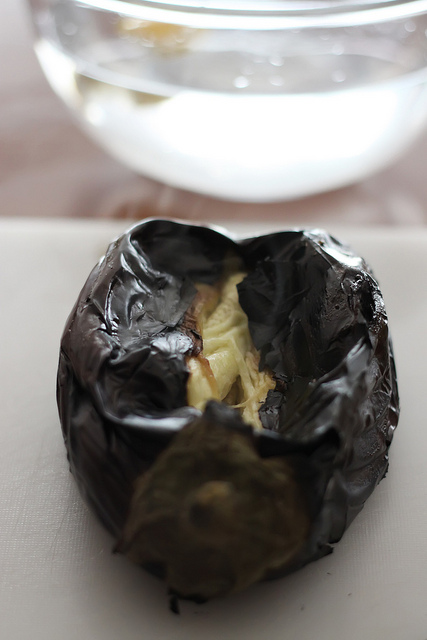
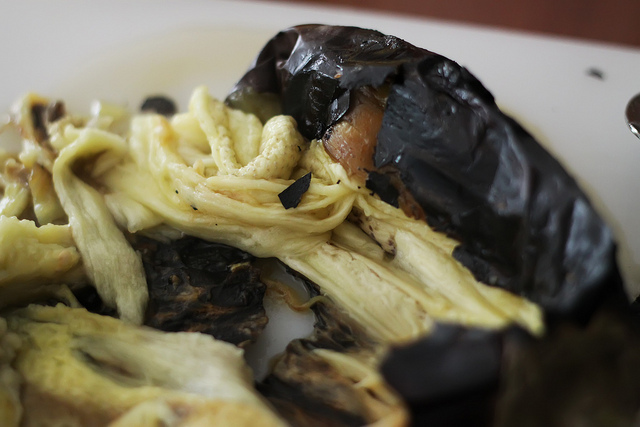
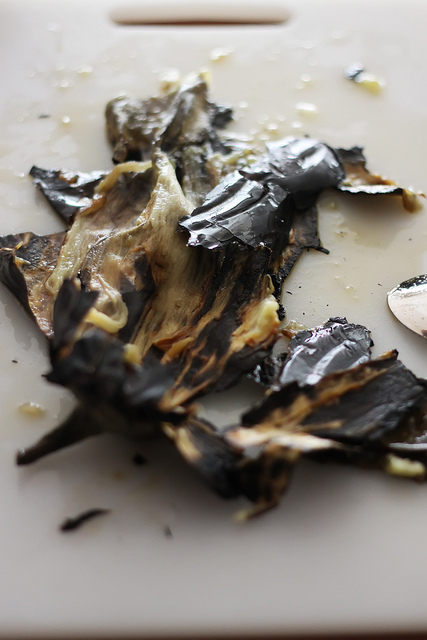
I can’t get over the memory of the eggplant dish that I ate at an Antakyan restaurant here in Istanbul when a hot eggplant roasted on the charcoal grill arrived to our table: it was slit open and its cavity was sprinkled with the tulum peyniri crumbles and coarsely chopped parsley. The combination of the tender smoked eggplant and pungent cheese punctuated by the fresh parsley was addictive enough for me to take over the dish served for the whole table and finish most of it. The other day the memories were refreshed by the recipe of the similar eggplant dish Liz, Tel-Aviv-based blogger, posted. So I thought it’s time to roast an eggplant or two and to give the rustic gözleme an urban makeover.
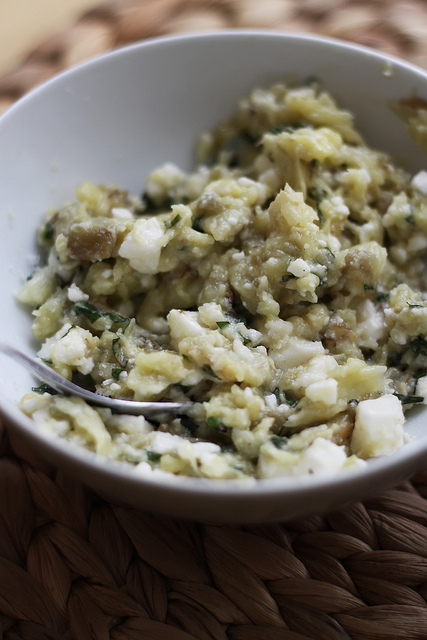
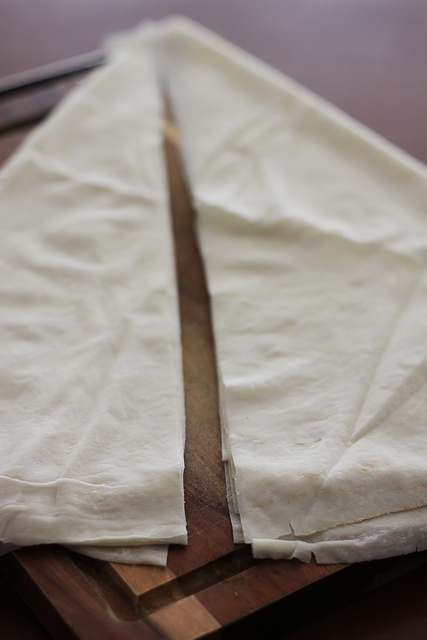
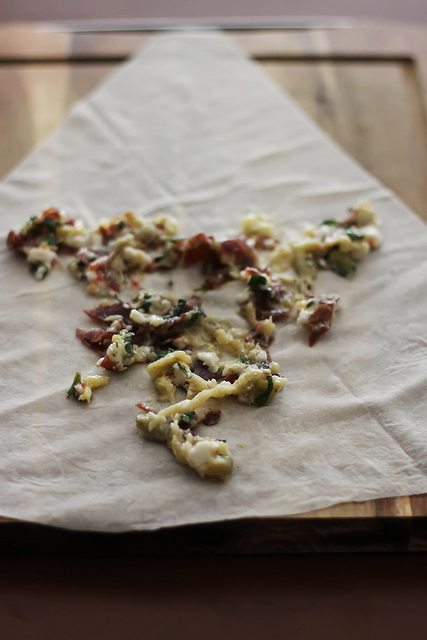
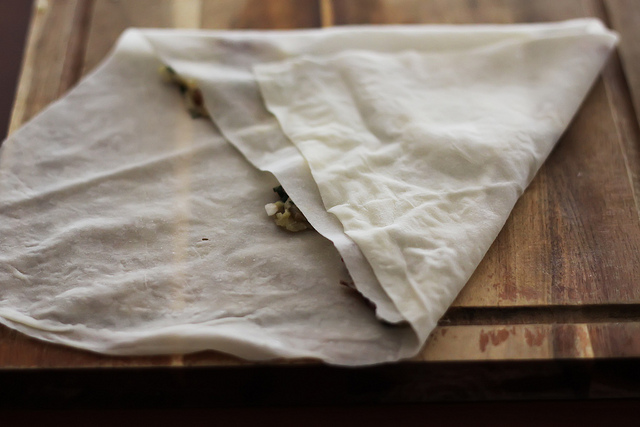

Gözleme with Smoked Eggplant, Goat Cheese and Mint
This dish is worth a trouble if you have a gas stove (we have a rocking roasting device for that in Turkey to make things easier) or a BBQ grill at your disposal; I find the baked eggplant never matches the richness of the smoked one. Choose larger eggplants, so you have the best flash-to-skin ratio and more pulp with less trouble.
Yufka can be replaced with phyllo dough (2-3 layers of phyllo dough instead of a single yufka is a good idea) even though I encourage you to look around and find a Turkish shop where you live to source yufka.
If you want to make a carviore version like the one on the photo above I made for my husband I replaced a bit of eggplant with pastırma, fragrant cured beef.
Prep Time: 1 Hr
Cook Time: 10 Min
Total Time: 1 Hr 20 Min
Serves: 4
Makes: 12 small gözleme
Ingredients
- 2 yufka dough sheets
- 900 gram eggplants washed
- 3 tbsp fresh lemon juice
- 180 gram young crumbly goat cheese crumbled
- 10 gram fresh mint leaves finely chopped
- freshly ground black pepper
- salt if required
- vegetable oil for brushing gözleme
Directions
- Roast eggplants: Place the eggplants on the gas burner. Check and rotate eggplants every now and then for 20-30 min. When the eggplants are evenly burnt along the entire length and nearly, transfer the roasted eggplants on a plate.
- Prepare eggplant filling: Pour plenty of cold water in a large mixing bowl, add 2 tbsp lemon juice and salt. With a spoon slit open an eggplant holding by the stem (be careful, the eggplant is piping hot inside!) and scoop all the pulp into the bowl of lemon water. Let stand about 10 minutes. Then transfer the pulp in a strainer, squeeze out excess liquid and let sit for 10-20 minutes. Transfer the strained eggplant pulp on the cutting board and give it a rough chop. Right on the same board mix the cheese, fresh mint, black pepper and (if required) salt. Set aside.
- Cut yufka: We are going to cut each yufka sheet into 6 segments. Open the yufka sheets and place them on top of each other aligning the sides. Lift the furthest edge of the dough and flip over towards yourself to alight with the edge closest to you and make the perfect half-circle. Now mentally divide the half-circle into 3 equal segments. First flip over the left segment to fully cover the central one and then flip the right segment on the top of the both. With a sharp knife cut the resulting fold into two equal parts starting from the top tip right into the middle of the base. Now unfold your yufka: you have 6 equal segments per one yufka sheet. Stack up the segments on top of each other and cover with a clean kitchen towel to prevent quick drying.
- Prepare gözleme: Take one yufka segment and scatter two tea spoons of the filling in the middle of it. Flip the upper, left and bottom corners of the yufka segment over the filling to form a triangle parcel. Continue, until you use up all the dough and filling.
- Cook gözleme: As all the gözleme parcels are ready, preheat a cast-iron or other heavy-bottomed pan (two pans, if you want to speep up the process), a small bowl with vegetable oil and a small brush. Carefully transfer one gözleme on the hot pan and let it cook for a few moments to slightly firm up, then lightly brush its top with the oil and flip over. Cook until the gözleme’s bottom is firmed up, brush the uncooked side, flip over and cook until the bottom gets firm and dotted with the light brown spots. Serve immediately. Gözleme can be refrigerated for a day and briefly re-heated on a pan before serving.


Löplöpçüler July 10, 2013 at 5:46 pm
Best gözleme is definitely with a dough which is opened by hand and oklava. The yufka (dough sheets) is only for the inexperienced girls and commercial shops

Please take a look to gözleme of Özen Teyze in Yaylaköy/Kuşadası http://www.loplopculer.com/2010/02/ksa-bir-ege-kacamag-datcayaylakoydoganb.html
paka paka
Olga Tikhonova Irez July 10, 2013 at 11:54 pm
I applaud you if you have time to roll yufka in the morning to put together some gözleme for breakfast. I don’t and I know that for most of my readers it is an unrealistic goal. On this blog I share the recipes that inspire people to cook rather than hold them back because of the complexity. When it comes to the yufka rolled by hand I teach the technique to the aspiring cooks - it’s a good couple of hours for a first-timer to get a grip of it.
Hester July 10, 2013 at 6:25 pm
Where do you recommend getting the best (vegetarian) gozleme in Istanbul? I’m planning a Nov trip, and want to make sure I hit all the best spots!
Olga Tikhonova Irez July 10, 2013 at 11:47 pm
It’s impossible to go wrong with getting gözleme because of its uber-simplicity and everyone making it is so ultra-specialized and experienced) Just make sure it’s piping hot and freshly done for you.