


I am often asked what Russian food I miss most. Well, Turks confident in abundance and superiority of their food may not be so curious, but everyone else always asks me this question hoping to learn more about the exotic Russian fare. Also, folks back home seem to measure my patriotic feelings by the culinary longings: during my latest visit I left someone speechless when I claimed I did not to miss a very special taste of Russian potato that must be (according to that person) impossible to find in Turkey.
More often than not I am puzzled when asked about the Russian food I miss. I used all my cross-border moves to learn more about the cuisines different from my native, and I took it to the extreme when I moved to Turkey solely for its food. I also tend to think that if you cook you can replicate most of the foods you might miss.
However the recent trip to Russia proved me wrong: I could not get enough of the foods I thought I was fine without. I guess appreciating your roots comes with age, and I am happy to have gotten there. So here is my far-from-exhaustive list of the Russian foods I miss in Istanbul.
1. Baked milk / Toplyonoe moloko
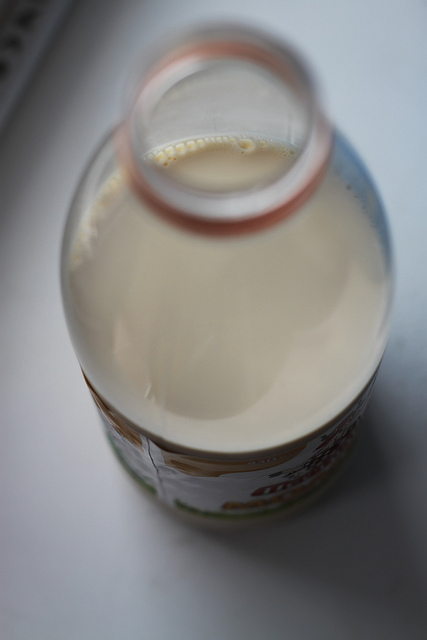
Russian baked milk is your dulce de leche minus the sugar. It’s a dark-cream colored beverage that can be prepared by simmering milk on the lowest heat possible for long-long hours. Originally milk was brought to boil and then left in the cooled down but still fairly warm stone oven: its browned skins were drowned every now and then, and gradually the milk was changing its color to pale brown. Baked milk has a stronger smell and a slight caramel flavor due to the caramelization of the sugars (lactose).
I love drinking toplyonoe moloko cold, and it’s also lovely in pastry and kasha (boiled grains), another Russian staple. As the baked milk curdles ryazhenka or varenets, popular sour milk products, are made.
You can find a vaguely similar dairy item in Nordic cooking, namely - brunost (brown cheese) and geitost specifically that is obtained by simmering goat whey for hours until it reduces and acquires characteristic brown color and oh so good caramel flavor. No wonder that this cheese is No.1 on the list of Norwegian food I miss: the Nordic tradition of preserving fresh milk feels very close to my Russian heart and palate.
2. Dark rye bread / Borodinsky khleb
This dark rye bread is one of the foods that anyone who grew up in Soviet Union and now lives abroad is deeply nostalgic about. The small bread with the burnt top may pale in comparison with the larger and more attractive loaves but it is truly a gem of the Russian bread making.
Baking bread is fairly complex and includes preparing a rye pre-ferment and a “brew”: part of the flour and malt in the recipe is combined with boiling water to “cook the starch” (zavarka), a technique that results in soft voluminous bread with a characteristic sweet note. Treacle added to the dough gives a dark color and signature sweetness to the bread. The loaves sprinkled with whole coriander seeds are aromatic and slightly wet inside.
Borodinsky khleb goes well with everything Russian (think salted herring) and not (think Brie cheese), and during my brief trips to Russia I consume record quantities of this bread. Maybe it’s time to start baking some in Istanbul?
3. Freshly salted cucumbers / Mаlosolnye ogurtsy
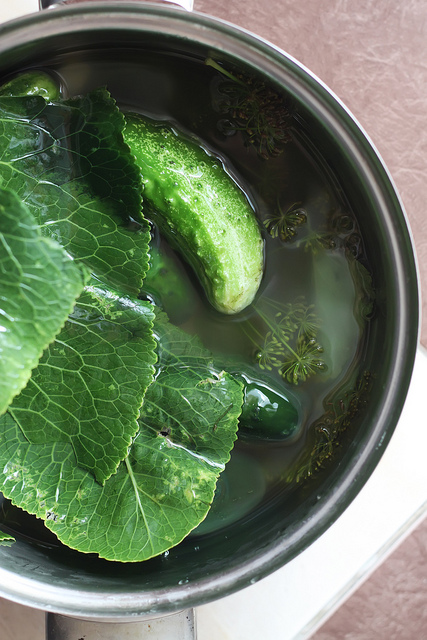
You know those young cucumbers from your own garden? They are fresh and firm, they are bright green with the pale white stripes, they have tiny bumps and hardly noticeable (but prominently felt) black thorns. What can be better? Only the quick pickle made of them. A simple brine of water and salt is prepared and flavored with fresh garlic cloves, a couple of red currant leaves, a few dill umbrellas packed with fresh aromatic seeds and a piece of easily-a-meter-long horse radish leave that gives pungent flavor and crunch to the cucumbers. Cucumbers stay in the brine for 2-3 days at room temperature, and unlike a pickle-the-proper they are meant to be eaten as soon as ready.
My grandma used to make them in 10L enamel bucket kept in the dark and cool corridor: before a meal she would fetch half a dozen of crunchy cucumbers into an enamel bowl to serve with the young potato cooked in their skins. My parents made a small batch this time, and we ate them away in two days. Coming back for more next summer.
4. Buckwheat honey / Grechishny myod
Turkey prides itself on its honey, and you might be able to get a decent deal if you search in the right place but more often than not I am disappointed: most of the honey found in Istanbul tastes sugar rather than the delicate fragrance of the meadow flowers, sweetness of linden or dark caramel of the buckwheat - the honey flavors I grew up with in Russia.
My favorite is the buckwheat honey, and at some point serendipity brought me to work in the Western Ukraine that boasts the best buckwheat honey in the world. I was getting jars filled with the caramel-like honey from a vendor at the Sunday farmer’s market, and when I lost a sight of him a wonder happened: a bee keeper from a small village near Lviv knocked the door of our project office and offered his honey and the thick pure-wax candles that smelled as if they could be eaten.
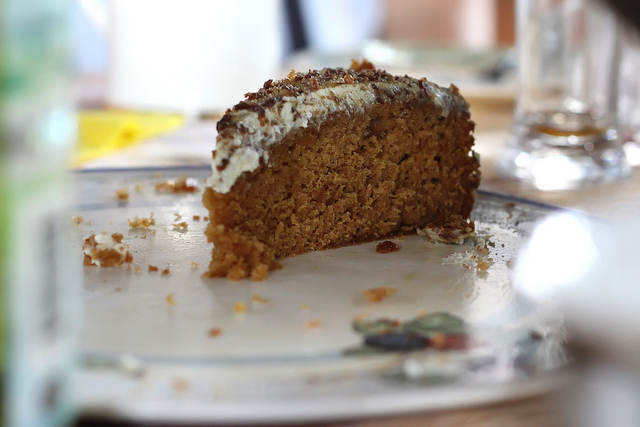
Honey addiction In Russia rivals only our love for tea and having a few spoons of honey with your tea (instead of adding sugar) is a favorite thing to do. No wonder in every house of my friends and family members honey would always appear on the table when the tea is served. At the kitchen pantry of my former colleague Svetlana who hosted us for the weekend I spotted a jar of dark buckwheat honey from Altai region and I immediately thought honey cake! I skipped half of the spices and rum and still ended up with the most fragrant honey cake ever!
5. Classic Soviet Ice-Cream / Plombir
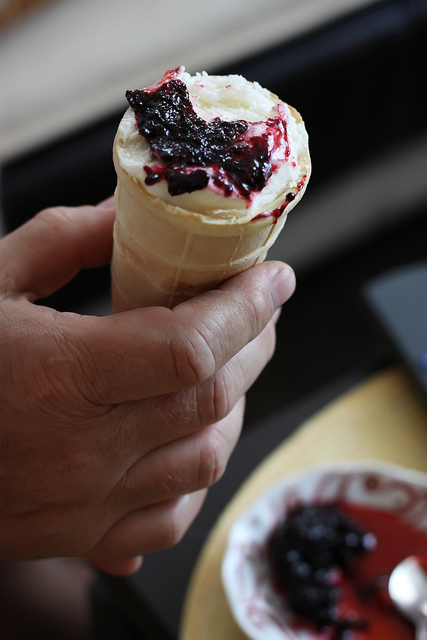
Plombir was the king of the Soviet ice-creams: creamy (12-15% fat) and soft (with starch or gelatin always included in the recipe). Plombir comes in only few varieties including vanilla, chocolate or creme-brulee (with milky caramel syrup added); the favorings always taste natural and never overshadow the taste of the fresh creamy milk.
I remember a typical Soviet establishment, small cafe called “Soki-Vody-Morozhenoe” (Beverages and Ice-Cream) that used to sell ice-cream by weight to enjoy right at the spot or take home. My grandma would equip me with the sufficient number of bills and coins as well as a 3L glass jar with a green tint (typically used for the home-made preserves) so I could make an ice-cream run. Or my mom would take me to the cafe for a portion of ice-cream: I would nearly die while waiting for our turn and watching the woman behind the counter portioning a few scoops of the creamy deliciousness in the steel vases and sprinkling them with grated chocolate or ground peanuts. In the regular shops plombir was sold in the thin crispy waffle cones. I was always peeping into the ice-cream refrigerator to watch the little ice-cream cones packed into a square cartoon box, and my secret dream was to take the whole box home one day.
As the GOST (state quality standard) mandating a certain recipe for plombir was removed a whole range of unsatisfying ice-creams crowded the market, many containing vegetable oils rather than the compulsory milk fats. However, the small ice-cream factory in my home town still keeps the old recipe and makes the best plombir in the whole universe. This time when I arrived to Ulyanovsk I announced to my parents that I want to eat plombir to my heart contents they offered enthusiastic support and bought plenty: no one ever says no to the good ice-cream in my family.
6. Unrefined sunflower oil /Podsolnechnoe maslo s zapahom
Thick aroma dark brown sunflower oil was the golden standard at my grandma’s kitchen for the long time. It tastes and smells like the vast field of sunflowers with the heavy heads loaded with the delicious seeds. When I close my eyes I can clearly imagine the taste of a simple vegetable salad of cucumbers and tomato (not unlike Turkish shepherd salad) dressed with this oil. We Russians have a special connection with the sunflower oil: during the Lent when animal fat is excluded from the diet the sunflower oil coming from an easy to grow and commonly spread plant becomes the key source of fat.
The story of unrefined sunflower oil is a sad one, thought because the heavy advertising of the companies that started producing refined sunflower oil in mid 90s convinced Russian home cooks to switch to the lighter and supposingly healthier version of the oil. It’s true that the refined sunflower oil has a higher smoking point (232C versus 107C of the unrefined oil) offering a healthier cooking alternative, but no one has cancelled the benefits of using cold-pressed unrefined oil as a salad dressing. I know nothing better than the home-made mushroom pickle with fresh onions enveloped in the thick aroma of the sunflower seeds.
7. Condensed milk / Sguschenka
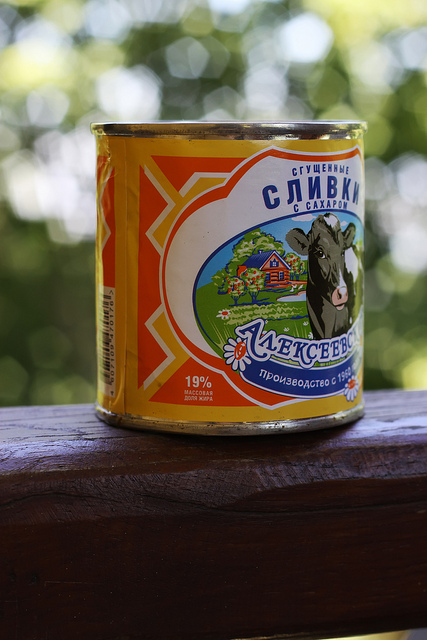
What is so Russian about this American invention? It is nothing sort of ironic during the Cold War sguschenka became an iconic food item in the USSR. Cans with the white and blue logo, still one of the most recognized brand images in Russia, was the best gostinets (present) especially during the days of deficit. Most of the time Soviet condensed milk was plain, but it was also possible to find condensed milk with cacao, coffee or chicory (little extravagant but rather lovable version with slightly bitter and yet sweet taste). The disappointing fact about the condensed milk that the 400 g can never lasted too long: it was too good in tea, coffee and pastry.
I have vivid memories of savoring sguschenka from my teenage years when I was a member of a hiking group at school, and the condensed milk was indispensable item on the shopping list for every hike. Sguschenka would be added to the instant coffee to replenish energy and enjoyed as a part of a sweet dish (zamazka) to be eaten on the last evening of the hike. The said dish combines sweet biscuits crashed into the powder and condensed milk: the huge pot of the mixture would be passed around the group sitting around the open fire, and the act would symbolize friendship. The more rounds the dish would make the stronger bonds the hiking group had developed; no one would want to eat the last spoon showing the lack of team spirit and care. American invention, you say?

 The rye bread is excellent slathered with bacon lard and served with a side of pickles. Great bar snacks!