

The green of summer is different from the green of spring. In spring the green comes from the young herbs and wild plants, a welcome change from the pale colors of the winter produce. Spring greens bring bold peppery and bitter flavors to your meals refreshing your palate and helping your body cleanse after the heavy winter diet. The green of summer is nothing like that. It comes with subtle tastes and succulent bodies to cool down and hydrate you. Think green beans, or zucchini, or cucumber.
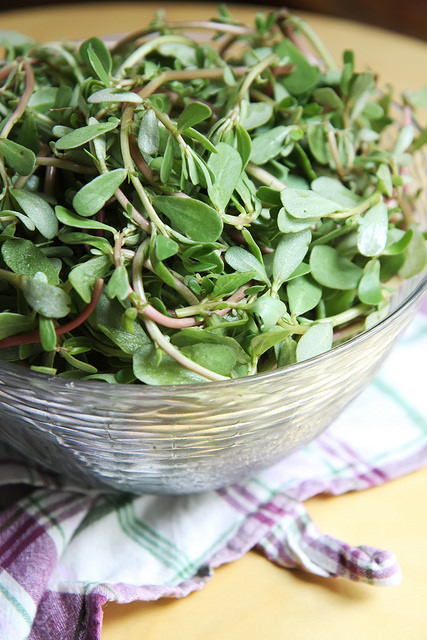
 Not accidentally purslane (semizotu in Turkish) comes out in summer. This succulent green plant with egg-shaped leaves and juicy stems boasts lemony taste and cucumber-like crunch. Originally it is a wild plant, a weed many gardeners declare a war upon. Absolutely random fact, but each purslane plant can produce over 50,000 tiny seeds making it impossible to get rid of it! Last fall as we visited an apple orchard with our photography and cooking workshop participants, I foraged a case of purslane just by the way, and the orchard owner told me I can come back for more anytime.
However, purslane can also be cultivated. It is easy to tell the wild plant from its cultivated brother: foraged purslane has got smaller leaves and thin reddish stem and often grows close to the earth, while the cultivated plant has got larger leaves and thicker steam and tends to grow upright.
Purslane contains record (for a plant) quantities of omega-3 fatty acids and melatonin that prevents the growth of cancer cells. Purslane is one of the best plant-based sources for Vitamin A critical for the healthy vision and skin (100 g contains 44% of the daily norm) and also rather high in vitamin C (35% of the daily norm). Also purslane is an important depository of iron (oxygen transport), magnesium (healthy bones and muscles), manganese (bone formation, healthy skin and blood sugar control) and copper (iron absorption and cholesterol balance). No wonder Michael Pollan, author of In Defense of Food and The Omnivore’s Dilemma, calls purslane one of the “two of the most nutritious plants in the world.”
For me the only offputting detail about purslane is the high content of oxalic acid. Do you know that sour sensation in your mouth and the gritty feeling on your teeth after you have eaten spinach? These effects may be even stronger as you eat purslane that has got more oxalic acid that the spinach does: 100 g fresh purslane leaves contain 1.31 g of oxalic acid while the same quantity of spinach contains only 0.97 g of the acid. There are concerns that the acid may contribute to the forming of oxalate kidney stones, but the research findings are mixed meaning that a person with no special health considerations can eat purslane; just please, don’t make it a new kale and sneak it into every single thing.
Purslane is commonly available in Turkey, also known as pimpirim or temizlik. Purslane is our spinach of the summer that Turkish home cooks eagerly turn into soups, stews, börek fillings and salads.
As we are explore Istanbul food markets with my customers, purslane appears an exotic animal to many foreign travelers to the city. However, purslane is not specific to Turkey and its cuisine. Already know during the times of the ancient Greece and Roman Empire, it has been cultivated in Europe since the 16th century and been included in the French and Dutch cuisines. Early settles of North America used it to fight scurvy. It’s commonly used in Mexico (known as verdolaga), in Iran, China, India and even my home Russia (портулак), to mention just a few. So I hope by now you are motivated to look out for purslane at the farmer’s markets, ethnic shops and specialty stores wherever you live.
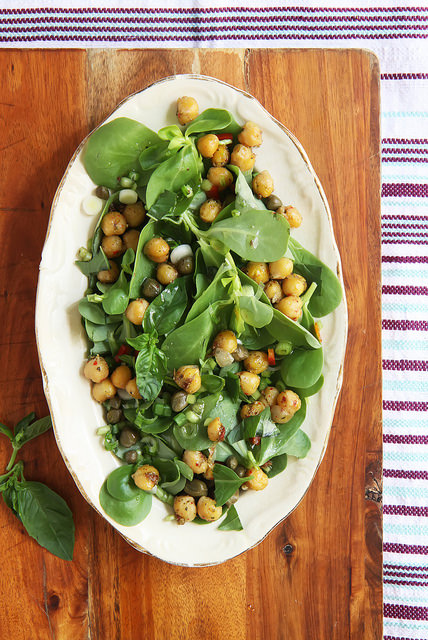
To depart from the two Turkish purslane classics, a salad of purslane with garlicky yogurt and a purslane stew, I have combined two sources of inspiration here. One is the purslane salad with chickpeas and the other is the spiced chickea and vegetable salad from Ottolenghi’s Jerusalem. The result is a satisfying salad that feels fresh and ah-so-summer. The spiced chickpeas do excellent job at offsetting the sourness of the purslane and bringing substance to the salad, so you can call it a meal on a warm sunny day.

Spiced Chickpea and Purslane Salad
You can use both wild and cultivated purslane for this recipe; either way make sure to wash it properly as described below. When it comes to the spiced chickpeas, nothing beats home cooked (versus canned) chickpeas, and you can get the detailed directions in cooking your own in my popular hummus article. Don’t be shy to make a larger batch of the spiced chickpeas: they keep well in the fridge for 3-4 days and make a great addition to any salad or can be enjoyed as a snack (think tahini dressing … mmm)
Source: Olga Irez (www.DeliciousIstanbul.com)
Prep Time: 20 Min
Cook Time: 5 Min
Total Time: 25 Min
Serves: 4
Ingredients
- 8 cups purslane leaves
- 3/4 cup finely chopped purslane stems
- 3/4 cup finely sliced green onions
- 1/4 cup capers
- 1/4 cup basil leaves washed and torn into small pieces
For vinaigrette:
- 3 tbsp extra-virgin olive oil
- 1 tbsp freshly squeezed lemon juice
- fine sea salt to taste
- freshly ground black pepper to taste
For spices chickpeas:
- 1 tbsp + 1 tsp extra-virgin olive oil
- 2 cups cooked chickpeas
- 2 tsp pink peppercorns
- 2 tsp whole fennel
- 1 tsp wild thyme (zahtar)
- 1/2 tsp ground cardamon
- 1/2 tsp fine sea salt
Directions
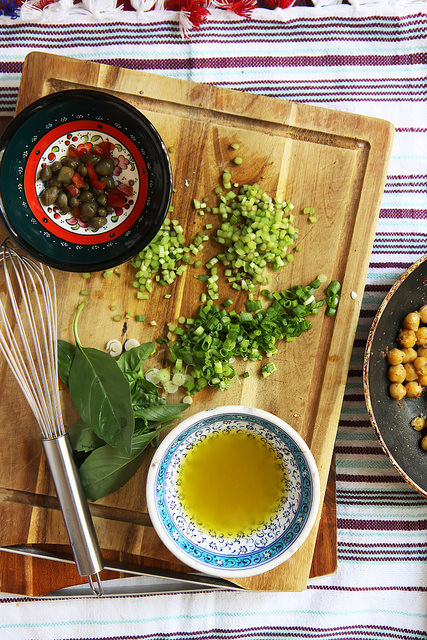
- Prepare purslane: If the purslane still has got its roots attached, chop them off. Fill a large bowl with cold water and soak the purslane for 10-15 min. Then rinse to remove any remaining soil and dry in a salad spinner. Separate the leaves and the stems. Measure 8 loosely packed cups of the purslane leaves and finely chop a bunch of the stems to make 3/4 cups. Reserve the rest of the stems for a stew (they freeze well): purslane contains a lot of mucilage that works great in thickening a gravy.
- Make spiced chickpeas: Gather the spices, grind them or pound in a mortar and pestle. Warm up the olive oil in a small pan on the low-medium heat. Transfer the chickpeas in the pan and shake the pan a few times to coat the chickpeas in oil. Drizzle the spices over the chickpeas and shake the pan a few times again. Cook for about 2 min to release the aroma of the spices and set aside.
- Make vinaigrette: Whisk the olive oil and lemon juice until the mixture gets a uniform color (emulsifies) and season with salt and black pepper to taste.
- Assemble salad: Transfer the purslane leaves in a large salad bowl, pour the vinaigrette over and toss with your hands to combine. Divide the leaves among the serving plates. In a mixing bowl combine the purslane stems, green onions, capers and basil leaves and then divide the mixture among the serving plates. Finally, sprinkle the spiced chickpeas over each plate and serve immediately.




Olga, this is my favorite!!
Such a nutritious weed!! never thought of it in relation to chickpeas.
Have a good weekend!